The Complete Guide to Types of Samurai Swords
Few historical artifacts capture our imagination quite like the traditional Japanese blades wielded by ancient warriors. These beautifully crafted weapons represent centuries of deep history, intense martial discipline, and unparalleled metallurgy. If you want to understand the history of Japan’s most famous warriors, you must first understand their weapons.
This guide explores the fascinating world of the samurai weapon. We will cover exactly what makes these blades unique, examine the different types of samurai swords, and answer common questions about their construction and use on the battlefield. By the end of this article, you will have a deep appreciation for how these masterworks of steel shaped history.
What is a Samurai Sword?
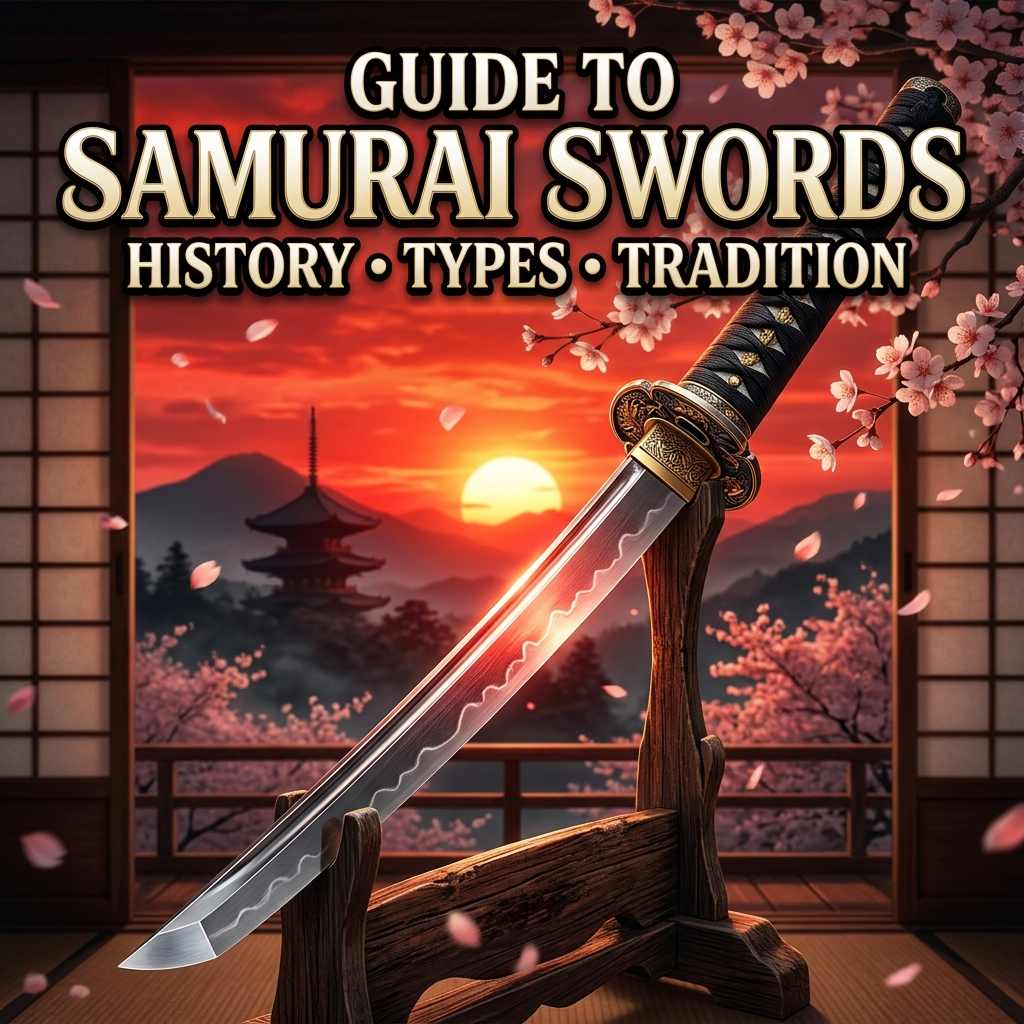
To answer the question of exactly what is samurai sword history, we must look back to feudal Japan. A samurai sword is a curved, single-edged blade traditionally crafted from specialized Japanese steel called tamahagane. These weapons were not just tools of war. They represented the soul and honor of the warrior who wielded them.
The samurai weapon served as a distinct symbol of social class. By law, only members of the samurai class had the right to wear these traditional Japanese blades in public. They typically carried them in pairs, a practice known as daisho, which included a long blade and a shorter companion weapon.
The craftsmanship required to forge these blades took years to master. Smiths dedicated their entire lives to perfecting the art of sword making. The result was a weapon that felt incredibly sharp, highly flexible, and resilient enough to withstand the brutal impacts of battlefield combat.
Types of Samurai Swords
While many people use the phrase “samurai sword” as a catch-all term, warriors actually utilized several distinct types of samurai swords. They chose their weapons carefully depending on the specific combat situation, location, and era.
The Katana
When you picture a samurai weapon, you are almost certainly thinking of a katana. This iconic Japanese sword features a curved, single-edged blade typically measuring around 24 to 28 inches long.
Warriors wore the katana thrust through a belt-like sash called an obi with the cutting edge facing upward. This specific orientation allowed the samurai to draw the sword and strike an enemy in a single, fluid motion. The katana became the primary weapon for samurai during the Edo period when close-quarters combat and dueling became more common than massive battlefield clashes.
The Wakizashi
The wakizashi served as the essential companion sword to the katana. Measuring between 12 and 24 inches, this shorter blade excelled in indoor environments and tight spaces.
Samurai often used the wakizashi for fighting inside buildings where a longer blade would easily catch on walls or low ceilings. Together, the katana and wakizashi formed the traditional daisho pairing. While a samurai would check their katana at the door when entering a home or castle, they kept their wakizashi tied to their waist at all times for personal protection.
The Tanto
The tanto is a traditional Japanese dagger. Usually measuring under 12 inches, samurai carried this small blade for extreme close combat and emergency self-defense.
The tanto featured a thick spine and a sharp point, making it highly effective for piercing through armor. Women of the samurai class also carried a variation of the tanto, called a kaiken, which they kept concealed in their garments for personal protection.
The Mighty Long Samurai Sword
When fighting on open battlefields or defending against cavalry charges, warriors required weapons with much greater reach. This is where the long sword samurai stepped into the spotlight.
A long samurai sword typically refers to the nodachi (field sword) or the odachi (great sword). These massive weapons were truly a sight to behold.
The Role of the Nodachi and Odachi
The nodachi and odachi featured blades that often exceeded three feet in length, with some historic examples reaching over five feet. These heavy weapons required two hands to swing effectively and demanded immense physical strength from the user.
A long sword samurai typically acted as heavily armed shock infantry during the chaotic wars of the 12th to 16th centuries. They used the incredible reach and weight of the long samurai sword to strike down mounted cavalry, cut the legs out from under horses, and break through dense enemy infantry formations.
Carrying a long samurai sword presented unique logistical challenges. Due to its massive size, a warrior could not wear it at their waist like a standard katana. Instead, they carried it across their back. Sometimes, a dedicated retainer carried the weapon into battle for them. Drawing the weapon required a specialized technique, often involving pulling the scabbard away from the blade rather than pulling the blade out of the scabbard.
Despite their terrifying effectiveness on the open field, these massive weapons eventually fell out of favor. As warfare shifted to tighter formations, firearms became prominent, and the peaceful Edo period emerged, the more convenient katana took over as the standard samurai weapon.
Frequently Asked Questions (FAQs)
What is the difference between a katana and a long sword?
The primary difference between a standard katana and a traditional European long sword—or a Japanese long sword like the nodachi—lies in the blade design, length, and combat application.
- Design and Use: A katana is a curved, single-edged blade designed primarily for precise slicing motions. It generally measures around 24 to 28 inches in blade length and allows for quick, drawing strikes.
- European Long Sword: A European long sword is a straight, double-edged weapon designed for both thrusting and cutting, often requiring two hands and measuring much longer than a katana.
- Japanese Long Sword: If referring to a Japanese long sword (the nodachi), the difference is primarily size. The nodachi is essentially a scaled-up katana with a blade exceeding 35 inches. Warriors designed it for battlefield sweeping strikes rather than the quick, precise draws of the katana.
How were samurai swords made?
The creation of traditional Japanese blades involves a complex, highly ritualized process that takes weeks or even months to complete.
- Smelting the Steel: Swordsmiths begin by smelting iron sand and charcoal in a specialized clay furnace called a tatara. This process produces tamahagane, also known as jewel steel.
- Folding the Metal: The smith then repeatedly heats, hammers, and folds the steel. This folding process purifies the metal by removing impurities, evens out the carbon content, and creates the sword’s distinctive and beautiful wood-grain pattern.
- Differential Hardening: To give the blade its famous hard edge and flexible spine, the smith applies a special clay mixture to the blade before heating it and quenching it in water. The clay coats the spine thickly and the edge thinly. When quenched, the edge cools rapidly and becomes incredibly hard. The spine cools slower, remaining softer and more flexible. This allows the sword to hold an extremely sharp edge while absorbing heavy impact without snapping.
Conclusion
Understanding the different types of samurai swords provides a fascinating window into the rich martial culture of feudal Japan. From the swift, precise draw of the katana and the indoor practicality of the wakizashi, to the devastating sweeping power of the long samurai sword on the battlefield, these weapons perfectly balance deadly function with breathtaking artistry.
The forging of traditional Japanese blades remains one of the highest achievements in historic metallurgy. The dedication of the swordsmiths and the discipline of the long sword samurai continue to command respect centuries after they first stepped onto the battlefield.
If you want to deepen your knowledge of Japanese history, consider visiting a local history museum that features traditional Japanese blades. Alternatively, you can explore martial arts dojos in your area that teach iaido or kendo to experience firsthand how these ancient sword techniques translate into modern practice.